
Your author website is more than just a digital home—it’s your online storefront, your brand ambassador, and one of your most powerful tools for connecting with readers. But even the most talented authors can fall into common website traps that hurt visibility—and ultimately, book sales.
MISTAKE #1
THE PROBLEM:
Over half of all web traffic comes from mobile devices. If your site isn’t mobile-friendly, readers may leave out of frustration, never to return.
THE FIX:
Choose a responsive design that adapts seamlessly to any screen size. At Being Wicked, every site we build is fully optimized for mobile—and our upcoming Novel Sites templates (launching soon!) are no exception. Whether you work with us or another design team, make “mobile-friendly” a non-negotiable requirement.
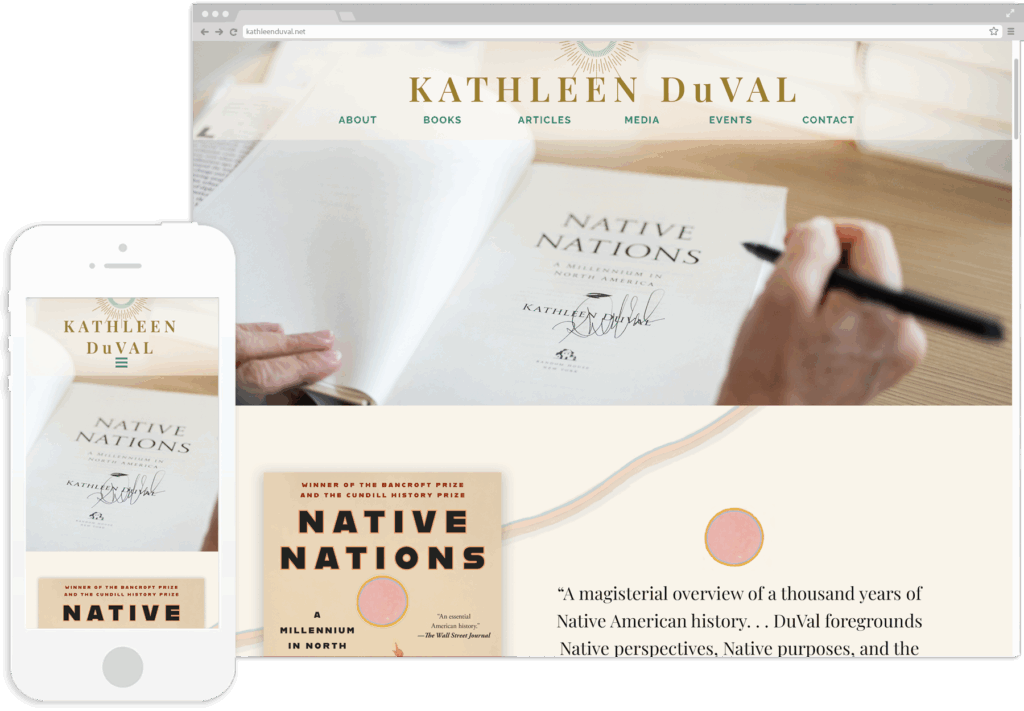
EXAMPLE: Kathleen DuVal’s site automatically adjusts/responds to the device being used, whether desktop or mobile for a consistent experience.
MISTAKE #2
THE PROBLEM:
Visitors don’t know what to do next—should they buy your book, sign up for your newsletter, or follow you on social media? A lack of direction means missed opportunities.
THE FIX:
Add prominent CTAs throughout your site, such as “Buy Now,” “Learn More”, “Join My Newsletter,” or “Read an Excerpt.” Place them strategically on your homepage, book pages, and blog posts. For newsletters especially, keep the sign-up visible in multiple spots.
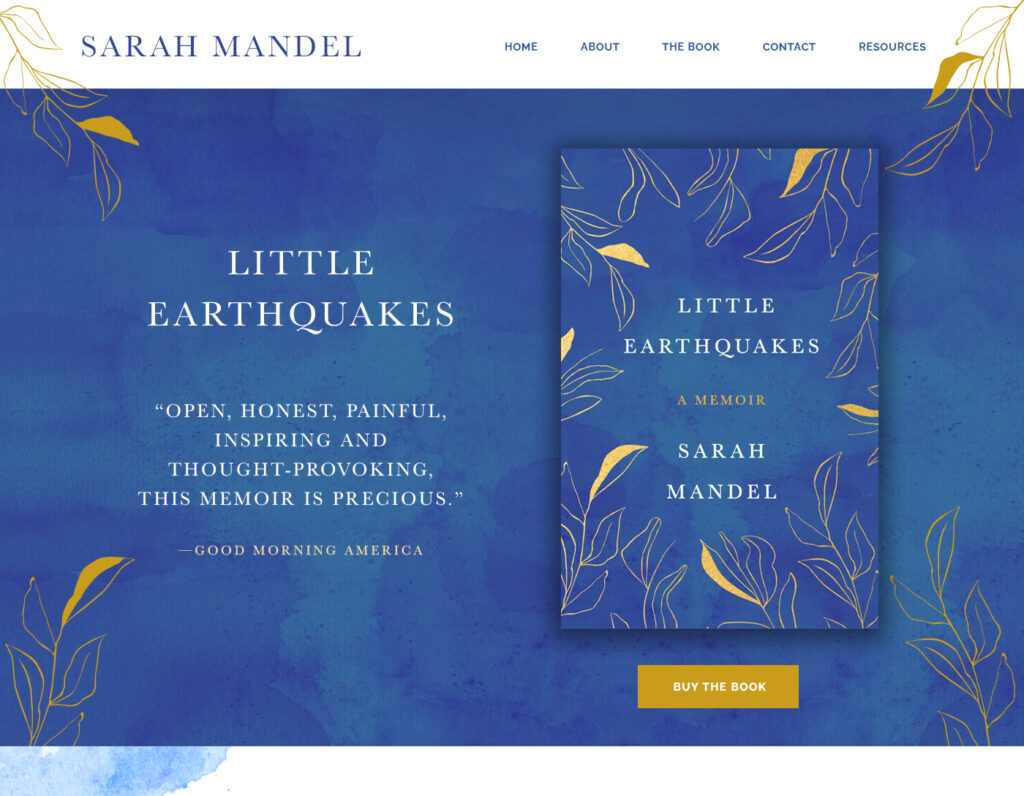
EXAMPLE: Sarah’s homepage focusses immediately on her book with a prominent CTA to “Buy the Book”
MISTAKE #3
THE PROBLEM:
Too much clutter, inconsistent branding, or hard-to-read fonts can confuse visitors and make your site feel unprofessional. Sure, you can’t judge a book by its cover—but let’s be honest, a great cover is often what draws us in.
THE FIX:
Stick to a clean, cohesive design with easy navigation. Use consistent colors and fonts that match your author brand (if you haven’t already read more about why an Author brand is important, grab our guide).
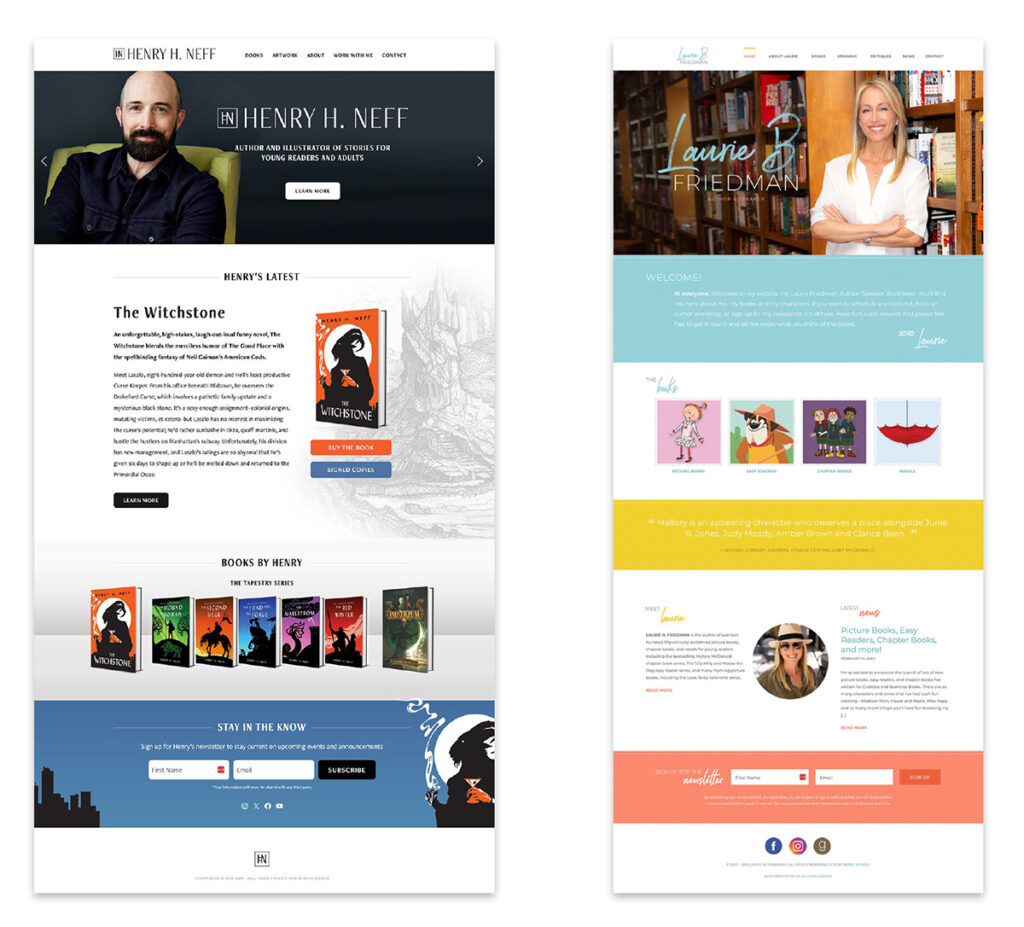
EXAMPLE: Henry Neff and Laurie Friedman write in very different genres. Their sites use colours and styles suited to their author brands in a clean and cohesive design.
MISTAKE #4
THE PROBLEM:
Visitors can’t find the information they’re looking for, like details about your books, your bio, or how to contact you.
THE FIX:
Ensure your site includes these key pages:
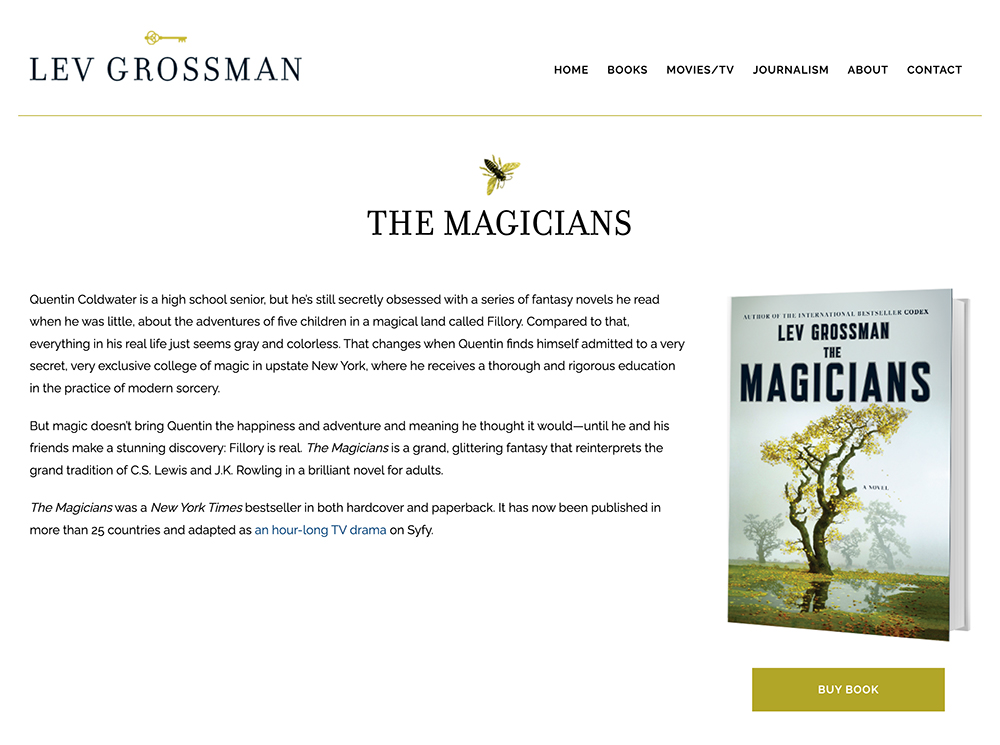
EXAMPLE: Lev Grossman’s navigation is clear and simple including additional pages specifically for his journalism work and movies/TV, but the core pages are all there.
MISTAKE #5
THE PROBLEM:
Your site doesn’t show up in search engine results, making it harder for readers to discover you.
THE FIX:
Use basic SEO practices:
BONUS TIP
Creating a professional author website can feel overwhelming, but you don’t have to do it solo. If you’re unsure whether your site is hitting the mark—clear CTAs, clean design, mobile-friendly layout—we offer a Free Website Audit for Authors. We’ll review your site and share practical, brand-specific recommendations. If you are interested, get in touch.
Spoiler: yes, you do, and it’s more than just a matching color palette. Your author brand is the invisible thread that connects your books, your personality, and your readers’ expectations.
This free guide shows you exactly how to build one that works, even if you’re pre-published.
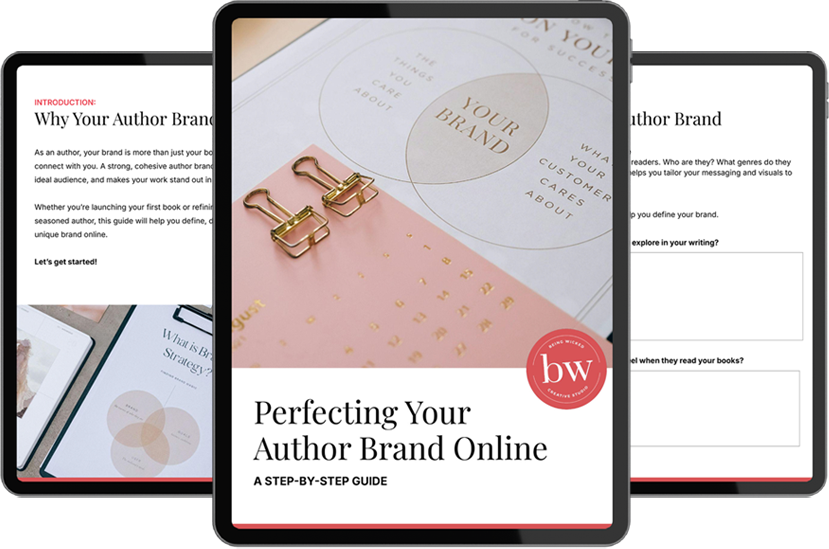
The Author Branding Starter Guide — delivered to your inbox.